The words “mobile gaming” conjure up images of flinging birds, swapping numbers, and matching candies on a phone or tablet. Or perhaps you imagine Link swinging a sword on a Nintendo 3DS or Sackboy running across a PS Vita screen.
But you’re missing another way to game on the go: a smartwatch.
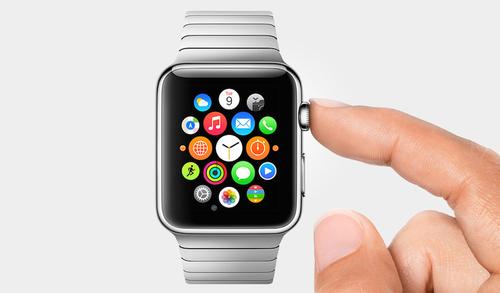
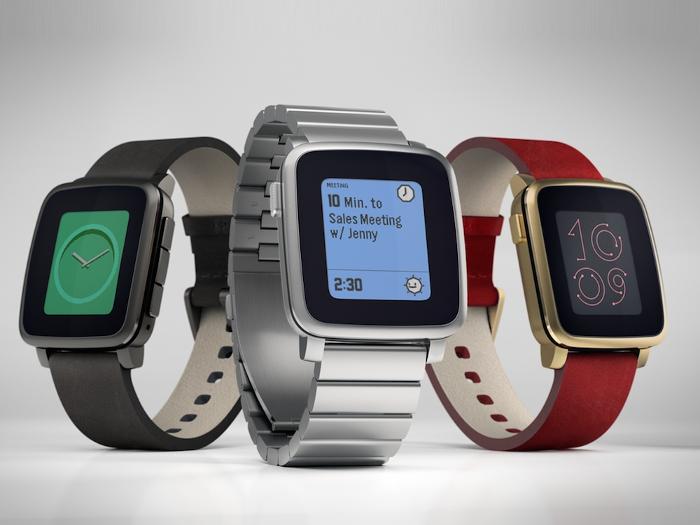
While smartwatch sales numbers aren’t too promising today — just under 7 million smartwatches were sold in 2014, according to independent research company Smartwatch Group — that’s bound to change. The Apple Watch, due out April 24, is predicted to sell somewhere in the neighborhood of 20 million units in its first year. LG, Motorola, Huawei and others are supporting the wearable Android Wear platform. The Pebble Time watch is the most-funded Kickstarter ever, currently topping a whopping $18 million with two weeks to go.
There’s a lot of time, energy, and money being poured into the new tech. But will you be playing games on your fancy new timekeeper?
Where there’s a screen, there’s a game
“Wherever games exist, gamers will want to play them — including right on their wrists,” says Scott Steinberg, CEO of game consulting firm TechSavvy. “The beauty of smartwatches is that they allow games to travel with users wherever they go and enjoy the added convenience of not having to hold a phone or tablet in their hands or pack along a dedicated handheld device.”
Most smartwatches aren’t really designed with gaming in mind, though, and they often pack less sophisticated play experiences, cautions Steinberg. But he thinks a company like Apple, which has made a killing with games on its other devices, could change that.
“[Apple] may help bridge the gap and elevate wrist-based gaming to widespread popularity as more developers flock to take advantage of these devices and bring novel play experiences along with them,” he says.
Other experts, like Michael Pachter, managing director of equity research at Wedbush Securities, aren’t so sure.
“Only games that don’t require a large screen, perhaps something like Trivia Crack, [might work]. Most other games would be too hard to play on a tiny screen,” he contends.
“It may be possible to create new experiences for the watch, like location-based treasure hunt games,” he grants, but overall he “sees little potential for conventional games on a small screen.”
A few hurdles
While the audience size is currently pretty small, some developers are already releasing games for the young platform.
The aptly named indie developer Teensy Studios recently launched a half-dozen games for Android Wear-based devices like the LG G Watch and Moto 360.
“We decided to experiment with different types of game play on Android and to explore Apple Watch as a platform, and what we found so far was a reasonable degree of success,” says CEO Fozia Ashraf. “But advertising is difficult to do, and people seem to be unwilling to pay for a wearable game.”
That’s an important point. Mobile gamers are used to freemium content — free to play, but usually cluttered with ads or the option to pay for additional content or time — but advertising on a 2-inch screen is challenging (and will undoubtedly have to take up the entire display for any impact). Similarly, monetizing a game with in-app purchases is difficult when it might require a nearby phone to complete the transaction.
Real-time ads are also power suckers, and watches are already dealing with limited battery life.
“Apple Watch has an incredible focus towards power saving, [which] limits our options,” says Ashraf.
One more challenge: Apple Watch does not support Unity, a popular development tool for mobile game-makers.
So how do you get around a small install base, tiny screen, and limited battery life? Teensy Studios is trying to figure that out.
Example: It’s been working on a project tentatively called Teensy Fitness Pets, a virtual pet “tethered to a persistent world on the phone, but living on the watch,” explains Ashraf. Features are linked to your fitness and day-to-day activities.
It’s unclear if that sort of game would take off on the watch, but there are definitely some intriguing ideas to mine here. Even seasoned publishers are excited about what new game types could be played on the platform.
Frank Gibeau, executive vice president of EA Mobile, says he sees “a day when playing games is as ubiquitous as listening to music … smartwatches and wearables are an exciting step in that direction.”
“Great mobile game design delivers bite-sized entertainment that can quickly engage players anytime, anywhere,” Gibeau continues. “And with smartwatches and wearables, it’s easy to imagine experiences that take your daily activity or movement into account, letting people literally play all day long.”
What can you play today?
Right now, the experiences are a little more basic. Games currently number in the tens — as opposed to the tens of thousands of smartphone and tablet games cluttering the App Store and Google Play — but here’s a look at a few of the better rated downloads.
You’ve got the entire solar system in the palm of your hand, er, top of your wrist. Built for Android Wear smartwatches, Wear Orbits is about keeping your planet alive by changing its orbit and avoiding stars, planets, and other obstacles hurtling toward you.
With black-and-white vector graphics, this tiny take on the coin-op classic lets you control your ship with the up and down buttons, while a quick tap on the Select button fires your laser and a long press thrusts your ship around the map.
Designed for round or square screens, this is an Android Wear game of Jacks or Better draw poker. Use your fingertip to choose which cards to keep, and the virtual dealer will flip you the rest. Required: an “installer” app on a companion phone.
This endless runner game for Android Wear devices challenges you to perfectly time jumps between buildings. Its simple, straightforward controls — tap anywhere to make your character jump — work well with the small screen and limited controls of a smartwatch.
This wrist-mounted clone of 2048 (which, in turn, is a clone of Threes!) is a puzzle game that presents you with a board of 4x4 tiles, and your goal is to double up the numbers by swiping in a desired direction. Its simple controls and graphics make a good match for smartphones.
You don't need me to tell you that the smartwatch is a sci-fi dream. From "The Jetsons" to "Knight Rider" to "Power Rangers", barking orders at a wrist-worn communicator has long been held up as a paragon of the high-tech future we must surely be drifting towards -- as inevitable as augmented-reality retina implants, hoverboards or a violent robot uprising.
Today, with Samsung, LG and Google unleashing a wave of glossy, futuristic smartwatches, it's tempting to think that we're on the cusp of the next technological revolution. But while researching a recent episode of Adventures in Tech -- the show I write and present for CNET -- I was made painfully aware that while the smartwatch is enjoying a new surge in media attention, the concept of a wrist-borne computer has been forced upon us time and time again, without even a hint of success.
Sony, Seiko, LG and Fossil have all shown off smartwatches over the last few decades, each attempt sinking sadly into obscurity. In the mid-90s Microsoft partnered with Timex to build the Data Link, a gloriously retro timepiece that absorbed data from a computer wirelessly, via code flashed as a series of white lines on a CRT monitor.
To make that episode of Adventures in Tech I tracked down an original Data Link, still in its box. The packaging is littered with plaudits from the likes of Popular Mechanics, Byte Magazine and Popular Science -- which awarded the Data Link its "Best of What's New" award. Gazing at the row of tiny trophies, I couldn't help but think the praise heaped upon this retro relic could be an echo of the column inches currently devoted to Google's Android Wear.
In 20 years' time, how will Android Wear be remembered?Luke Westaway/CNET
Believe it or not, Microsoft built a slightly more contemporary rival for Google's new platform. In the early 2000s the software giant embarked on perhaps the most ambitious smartwatch campaign in history with its SPOT (Smart Personal Objects Technology) platform. SPOT technology would, Bill Gates enthused in 2003, find its way into a broad range of household objects, beginning with smartwatches.
Bill Gates promotes the SPOT Watch in 2004.Microsoft
A number of partners like Fossil and Suunto teamed up with Microsoft to build SPOT watches, which -- believe it or not -- received data via FM radio broadcast, using a subscription-based service called MSN Direct. Needless to say, as mobile phones became increasingly Internet-capable there soon wasn't much need to have news headlines, horoscopes and messages sent to your watch over radio waves.
Nevertheless, the SPOT watch, like the smartwatches before it, was out there if you wanted to buy it. And ultimately, hardly anyone did.
Indeed, as far back as the mid-80s there was wearable tech on sale that was compatible with computers such as the Apple II, and yet in 2014 the overwhelming majority of watch-wearers still stick to low-tech, time-telling devices. Why?
The smartwatch: We've been here before.Seiko
As far as I can see, there are two possible reasons for the smartwatch's repeated failure to launch. First, it could be that the technological advances required to make smartwatches genuinely appealing haven't been present thus far. The second reason is a less hopeful one: maybe people just don't like smartwatches.
Google, take note
It's not clear which of these two reasons is the right one to explain our repeated rejection of the smartwatch. Certainly Android Wear comes at a time when mobile gadgetry is positively alive with potential -- we have Bluetooth for fast wireless communication with our always-connected smartphone, and stunning curved displays that can render pertinent information and notifications with more beauty than ever before.
Google however would be wise to take note of the failed smartwatches of yesteryear, because even if they were never up to the task technologically speaking, they do prove one thing -- that persuading the general public to buy, wear and use a high-tech timepiece is no picnic. It's not enough that the smartwatch looks and feels futuristic -- they've done that for decades. What we need is for these minuscule marvels to be better than a Rolex, better than a bog-standard Casio digital watch, better than wearing nothing on your wrist at all.
The spectre of Apple
Notifications are Android Wear's bread and butter.Screenshot by Jason Cipriani/CNET
The current crop of smartwatches serve two main purposes -- keeping track of your activity (to inform health-tracking apps and the like), and showing you notifications from your smartphone, such as missed calls, weather updates or texts.
These might be useful things to have, but I'm sure there are plenty of you out there who'd agree those aren't especially fun or exciting features. More to the point, smartwatches as they stand don't do much that a smartphone can't do. What the smartwatch industry needs is a company that can either a) think of something new and interesting for high-tech watches to do, or b) persuade us that receiving texts on our wrists is actually a fun, sexy, fashionable way to spend our time -- and money.
Apple's long-rumoured iWatch could provide the marketing push to force smartwatches into the public consciousness. After all, simply think back to 2010 and the scepticism surrounding the iPad, which at first appeared an almost laughably peculiar device -- "It's just a giant iPhone," many chortled. It's since proved to be a hugely popular and important piece of tech. Then again, the smartwatch may prove to be an idea that not even Apple can sell.
A new 3D?
The smartwatch and wearable tech phenomenon is fascinating, because in terms of success, it really could go either way. Google and Apple may ride the next wave of consumer technology all the way to the bank, but it's also possible that the smartwatch revolution is one part potential and nine parts wishful thinking.
Well, it's still wearable tech.Sarah Tew/CNET
New smartphones and tablets have, over the last few years, become more iterative and steadily less exotic -- something UK analyst Ernest Doku referred to as "handset fatigue" when we spoke to him about iOS 8. As smartphones cease to be the hottest new thing, tech manufacturers understandably start looking for something new to sell us. And they appear to have settled on hyper-advanced wristwear.
In this respect, smartwatches remind me a little of 3D, the technology foisted upon the public in a bid to keep cinemas full, and TV sales healthy, but that is frequently bemoaned by actual movie-goers. The sheer force of will from an entire industry will push smartwatches into our lives, but it's another matter altogether whether or not the public will really embrace them.
It's not impossible by any means, and I'd love to see one manufacturer or one app developer make it, in one elegant swoop, abundantly clear why the smartwatch is the new must-have gadget. But if you think back to Microsoft's poor old SPOT watch, it's clear that without this lightning bolt of brilliance, the battle to make the smartwatch popular may be a tougher fight than Google -- or anyone -- had anticipated.