Pages

Showing posts with label Gaming. Show all posts

Sunday, 19 July 2015

Retail video game industry bounces back to life in June

batman-arkham-knight-warner-bros.jpg
Batman: Arkham Knight was the best-selling game of the month, despite a disastrous launch on the PC.Warner Bros.
In the same month in which the video game industry held one of its largest conferences dedicated to upcoming titles, sales of physical games and game hardware jumped to record highs for the year.
The Electronic Entertainment Expo, the marketing extravaganza dedicated to the video game industry's biggest titles of the year was held in Los Angeles this June. Some of the biggest game makers, from Microsoft to Sony, and Electronic Arts to Ubisoft, held events to tease upcoming blockbuster titles such as the space-age shooting game "Star Wars Battlefront" and the action adventure title "Assassin's Creed: Syndicate."
The response from consumers appears to be positive as retail sales of physical games on discs and accompanying hardware saw year-over-year growth in June, according to market researcher NPD Group. Overall sales of software, hardware and game accessories in the US grew 18 percent for the month to $869.4 million.
Since the introduction of new game hardware from Microsoft and Sony in November 2013, the retail game industry has been struggling to stabilize itself as it transitions away from old hardware, released a decade ago, to new devices released in the past few years. Sales of these upgraded consoles have been strong, but software sales have fluctuated and, on the whole, have tended to fall from year-ago comparisons. That's due to a lack of enthusiasm and lack of diversity in new games, analysts say, at least those titles that are purchased from US retail outlets like GameStop and Amazon, which is the only segment NPD tracks.
That appears to be changing, if only in small bursts of positive growth. Yet the renewed enthusiasm for new releases shown during E3 indicates that momentum for rising retail game sales may be building.
Software sales of games on discs grew 19 percent to $354.1 million. The best-selling retail game of the month was Warner Bros.' comic-inspired action game Batman: Arkham Knight -- despite its controversial and buggy launch on PC -- followed by the long-awaited console release of popular fantasy game The Elder Scrolls Online. Warner Bros. had even more good news last month, taking the third spot with LEGO: Jurassic World and continued success of The Witcher 3: Wild Hunt, which came in fourth.
"This is the fourth month of year-over-year [software] increases so far in 2015; through the first half of the year, software is up 3 percent," NPD analyst Liam Callahan wrote in a statement. "With a strong lineup of games for the remainder of the year, there is the potential for a positive growth in the second half of the year as well."
Game console sales in particular were up 8 percent in June to $313.1 million from this time a year ago. That's a reassuring jump after months of slumping console sales had indicated that perhaps a majority of players had already upgraded to newer hardware, and the remainder of consumers were simply not interested.
Sony was pleased with the results in June thanks mostly to a special bundled version of its PlayStation 4 along with Batman: Arkham Knight. The PlayStation 4 was the top seller.
Callahan noted that these types of hardware bundles that include brand new games, and not simply older and less popular titles, helped boost the overall share of console bundles to 82 percent of sales in June 2015, u[ from 35 percent a year ago. "June 2015 was especially strong for hardware bundle sales as the 82 percent share of hardware attributed to bundles in June 2015 is above the year-to-date total of 67 percent share," Callahan wrote.
Microsoft was undeterred by Sony's performance, saying in a statement that "Xbox One sales in the US were up 51 percent over June 2014 and active global Xbox Live users (Xbox One and Xbox 360) grew 22 percent."
As has been the case in previous months, sales of games over the Internet are an even brighter spot for the industry. SuperData Research, which tracks sales and deliveries over the Internet of games and game add-ons, said the market grew 18 percent in June to $1.02 billion year over year.
"Generally speaking, Western [countries] engagement with mobile games often falls during the summer, but last month's mobile revenue was up 4 percent over May," said SuperData CEO Joost van Dreunen. SuperData's report also added that sales of mobile games were up 20 percent to $367 million. Sales of console and PC games hit a combined $314 million, up 30 percent.

Saturday, 14 March 2015

Nintendo's future still lies in the glory days of gaming

From CNET
wiiuzeldascrn02e3.jpg
The Legend of Zelda, one of Nintendo's most successful franchises, has a new game coming out on the Wii U later this year, marking the 18th installment in the series.Nintendo
Nintendo's future is still firmly rooted in its past.
That's what we learned this week from the Japanese game maker, whose 3DS handheld led sales in the US retail games industry in February, beating out Sony's PlayStation 4 and Microsoft's Xbox Oneconsoles.
What made the difference was a 15-year-old game called The Legend of Zelda: Majora's Mask, which Nintendo rereleased alongside an upgraded version of the device that month. The title was the best-selling game and the fastest-selling Zelda portable release in history, with more than 500,000 copies sold so far, Nintendo said.
That's not a huge surprise. Nintendo is perhaps the only video game company capable of rereleasing a game older than the "Harry Potter" films to rave reviews. The secret to Nintendo's success is that its aged franchises like Super Mario Bros. and the adventure titles of The Legend of Zelda are considered timeless classics players clamor for year after year.
"Nintendo has always put out content that is lasting and is content that the consumer plays for extended periods of time," said Reggie Fils-Aime, president and chief operating officer of Nintendo's North American division, in an interview.
That strategy may be working now, but the company has still struggled in the past. Over the last two years, there have been calls for the game maker to look past its Wii U video game console and 3DS handheld, to the iPhone, iPad and other devices powered by Google's Android. Many of the company's fans, it's believed, may no longer own its devices but do still love old Nintendo games.
Nintendo has had to contend with an upswell in portable gaming alternatives on smartphones, a platform for which the company refuses to release its iconic games.Sarah Tew/CNET
"In this games business, the axiom is that software drives hardware, and we've seen that over our 30+ year experience in this category," Fils-Aime said. Put the software somewhere else, like the iPhone, and the hardware loses, the theory goes.
That hasn't always worked. Nintendo's Wii U, released in 2012 as the follow-up to the original and best-selling Wii console, has perpetually underperformed expectations, and sales of the 3DS have begun to slow. Analysts say a lack of compelling games is the chief reason, though they also note that much of Nintendo's core audience may have replaced them with the world-building game Minecraft, or upgraded to more-serious fare like the shooting games of Call of Duty.
Since last summer, Nintendo has answered those critics by releasing a string of hotly anticipated titles like the fighting game Super Smash Bros., the racing game Mario Kart 8 and the new Majora's Mask, all drawing from the company's celebrated franchises.
"I don't blame Nintendo for going back to the well," said Lewis Ward, an industry analyst with research firm IDC. "If you go back to the Wii, there were some Mario games released in the first couple years that were still selling significant volumes at the end of the Wii's life cycle."
Nintendo's reliance on its iconic characters is not without its speed bumps. A rereleased high-definition version of 2002's The Legend of Zelda: The Wind Waker failed to crack even the Top 10 of the US retail sales charts when it was released in September 2013. Though it did get a sizable number of consumers plunking down for a Wii U finally when it bundled the game with the console.
zelda-wii-u.jpg
Though Nintendo has brand-new games in the pipeline, it's still placing its bets on fan favorites like Zelda, pictured here for the Wii U and due out later this year.Nintendo
Still, the device hasn't been able to live up to its predecessor, no matter what Nintendo has done.
"I don't think there's any opportunity for the Wii U to come back and be the top-selling" console, Ward said. But is it at least competitive against the Xbox and PlayStation? "If you asked me a year ago, I would have said no shot, but I do think that you see signs of hope."
Nintendo plans to keep up the pressure. Later this year, the company is expected to release a new Zelda game, as well as a new installment of its space shooter franchise Star Fox, both of which the company expects will get even more Wii U units into living rooms. The company will also offer brand-new games too.
The company won't overuse its old games, though, Fils-Aime said. Nintendo won't follow in the same steps of games like Call of Duty, releasing a new iteration every year, he said. "We put out one Mario Kart per platform per generation."
That strategy has led many Nintendo fans to hold on to their decades-old game consoles to replay their favorites. What's unclear is whether the Wii U will be as equally loved decades from now.
"We certainly hope so," Fils-Aime said. "And in the end it's going to be placed on our ability to have these unique compelling experiences that stand up to time."

Smartwatch Gaming Is Coming, But Will It Be Any Fun?

Smartwatch Gaming Is Coming, But Will It Be Any Fun?
The words “mobile gaming” conjure up images of flinging birds, swapping numbers, and matching candies on a phone or tablet. Or perhaps you imagine Link swinging a sword on a Nintendo 3DS or Sackboy running across a PS Vita screen.
But you’re missing another way to game on the go: a smartwatch.
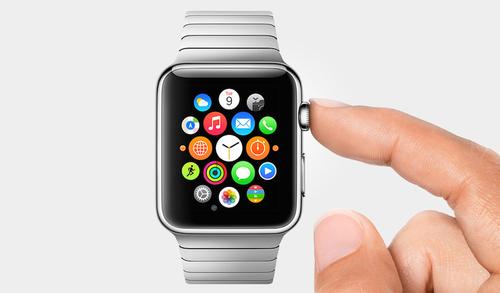
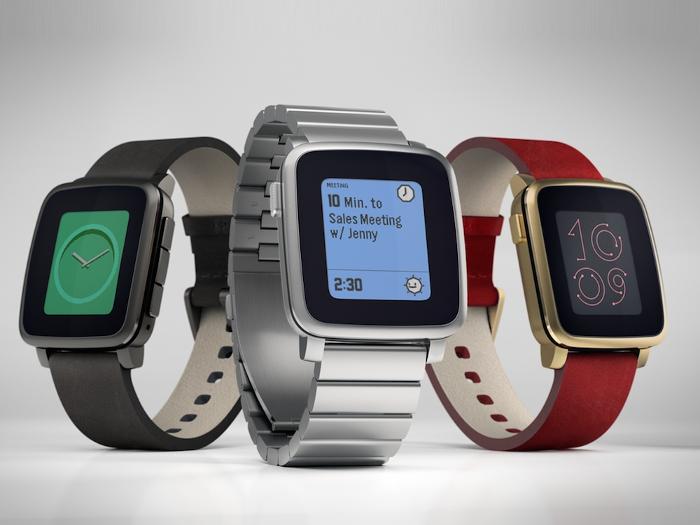
While smartwatch sales numbers aren’t too promising today — just under 7 million smartwatches were sold in 2014, according to independent research company Smartwatch Group — that’s bound to change. The Apple Watch, due out April 24, is predicted to sell somewhere in the neighborhood of 20 million units in its first year. LG, Motorola, Huawei and others are supporting the wearable Android Wear platform. The Pebble Time watch is the most-funded Kickstarter ever, currently topping a whopping $18 million with two weeks to go.
There’s a lot of time, energy, and money being poured into the new tech. But will you be playing games on your fancy new timekeeper?

Where there’s a screen, there’s a game

“Wherever games exist, gamers will want to play them — including right on their wrists,” says Scott Steinberg, CEO of game consulting firm TechSavvy. “The beauty of smartwatches is that they allow games to travel with users wherever they go and enjoy the added convenience of not having to hold a phone or tablet in their hands or pack along a dedicated handheld device.”
Most smartwatches aren’t really designed with gaming in mind, though, and they often pack less sophisticated play experiences, cautions Steinberg. But he thinks a company like Apple, which has made a killing with games on its other devices, could change that.
“[Apple] may help bridge the gap and elevate wrist-based gaming to widespread popularity as more developers flock to take advantage of these devices and bring novel play experiences along with them,” he says.
Other experts, like Michael Pachter, managing director of equity research at Wedbush Securities, aren’t so sure.
“Only games that don’t require a large screen, perhaps something like Trivia Crack, [might work]. Most other games would be too hard to play on a tiny screen,” he contends.
“It may be possible to create new experiences for the watch, like location-based treasure hunt games,” he grants, but overall he “sees little potential for conventional games on a small screen.”

A few hurdles

While the audience size is currently pretty small, some developers are already releasing games for the young platform.
The aptly named indie developer Teensy Studios recently launched a half-dozen games for Android Wear-based devices like the LG G Watch and Moto 360.
“We decided to experiment with different types of game play on Android and to explore Apple Watch as a platform, and what we found so far was a reasonable degree of success,” says CEO Fozia Ashraf. “But advertising is difficult to do, and people seem to be unwilling to pay for a wearable game.”
That’s an important point. Mobile gamers are used to freemium content — free to play, but usually cluttered with ads or the option to pay for additional content or time — but advertising on a 2-inch screen is challenging (and will undoubtedly have to take up the entire display for any impact). Similarly, monetizing a game with in-app purchases is difficult when it might require a nearby phone to complete the transaction.
Real-time ads are also power suckers, and watches are already dealing with limited battery life.
“Apple Watch has an incredible focus towards power saving, [which] limits our options,” says Ashraf.
One more challenge: Apple Watch does not support Unity, a popular development tool for mobile game-makers.
So how do you get around a small install base, tiny screen, and limited battery life? Teensy Studios is trying to figure that out.
Example: It’s been working on a project tentatively called Teensy Fitness Pets, a virtual pet “tethered to a persistent world on the phone, but living on the watch,” explains Ashraf. Features are linked to your fitness and day-to-day activities.
It’s unclear if that sort of game would take off on the watch, but there are definitely some intriguing ideas to mine here. Even seasoned publishers are excited about what new game types could be played on the platform.
Frank Gibeau, executive vice president of EA Mobile, says he sees “a day when playing games is as ubiquitous as listening to music … smartwatches and wearables are an exciting step in that direction.”
“Great mobile game design delivers bite-sized entertainment that can quickly engage players anytime, anywhere,” Gibeau continues. “And with smartwatches and wearables, it’s easy to imagine experiences that take your daily activity or movement into account, letting people literally play all day long.”

What can you play today?

Right now, the experiences are a little more basic. Games currently number in the tens — as opposed to the tens of thousands of smartphone and tablet games cluttering the App Store and Google Play — but here’s a look at a few of the better rated downloads.
Wear Orbits (Teensy Studios)
You’ve got the entire solar system in the palm of your hand, er, top of your wrist. Built for Android Wear smartwatches, Wear Orbits is about keeping your planet alive by changing its orbit and avoiding stars, planets, and other obstacles hurtling toward you.
With black-and-white vector graphics, this tiny take on the coin-op classic lets you control your ship with the up and down buttons, while a quick tap on the Select button fires your laser and a long press thrusts your ship around the map.
Wear Video Poker (Keesoft Apps)
Designed for round or square screens, this is an Android Wear game of Jacks or Better draw poker. Use your fingertip to choose which cards to keep, and the virtual dealer will flip you the rest. Required: an “installer” app on a companion phone.
Skyscraper Jumper (Teensy Studios)
This endless runner game for Android Wear devices challenges you to perfectly time jumps between buildings. Its simple, straightforward controls — tap anywhere to make your character jump — work well with the small screen and limited controls of a smartwatch.
2048 for Android Wear (scoutant.org)
This wrist-mounted clone of 2048 (which, in turn, is a clone of Threes!) is a puzzle game that presents you with a board of 4x4 tiles, and your goal is to double up the numbers by swiping in a desired direction. Its simple controls and graphics make a good match for smartphones.

Sunday, 1 March 2015

Virtual reality is taking over the video game industry

From CNET
Sony's Project Morpheus VR headset is slated to shine again at this year's Game Developers Conference. The company is planning to hold a nearly four-hour press conference dedicated to the technology on Tuesday.Josh Miller/CNET
Just one year ago, the idea of virtual reality -- or simulated 3D worlds we view through special goggles strapped to our face -- seemed like an outlandish concept. Today, it's starting to come into its own.
At the annual Game Developers Conference in San Francisco this week, game makers, developers and some of the tech industry's largest companies will be in attendance to discuss their latest hardware and software designed to transport players to virtual environments.
What makes this year different? Hollywood has used the idea in its movies for decades. Even the technology industry has created prototypes to show from time to time. Now, we're finally expecting to see high-profile VR devices move closer to consumer products. GDC marks the one of the biggest meetups when we will likely get a glimpse of the devices that will eventually land in people's living rooms.
At last year's show, Sony unveiled its first virtual reality device for video games. Until then, virtual reality looked like a niche, a sideshow to the $77 billion dollar industry. With Sony's device, code-named Morpheus, virtual reality became a star of the show.
Shortly after, Facebook bought industry posterchild Oculus VR for $2.3 billion. That acquisition signaled to tech companies everywhere that VR wasn't going to lose its sheen after sucking up millions of dollars in investment, as it did in the early '90s before fading back into science fiction.
"Because Facebook is behind it, I think people will keep plugging away unit they get it right," said Michael Pachter, an analyst at Wedbush Securities.
A whirlwind of activity has followed. Mobile giant Samsung has introduced $250 VR goggles that cradle its Galaxy-brand of smartphones, and Google has parlayed a strange cardboard DIY headset project into VR partnerships with LG and toymaker Mattel. Even Microsoft has some skin in the game, albeit with a so-called augmented reality headset called the HoloLens, which was unveiled in January and can overlay 3D images onto everyday scenes.
The applications for VR, too, have expanded beyond games and into film, sports, education and health care. "It's naive to think this will be games only," Pachter said.
Oculus' latest Rift prototype, dubbed Crescent Bay, may be the final headset design before the Facebook-owned company brings its product to market.Nick Statt/CNET
Not only will GDC feature the usual players, namely Facebook's Oculus with its prototype Rift headset, but we'll also see the game industry's lesser known names entering the fray for the first time. Valve, known best for its Half-Life sci-fi games and Steam online store, is set to show off a headset of its own, called SteamVR. PC maker Razer will also have something to show, a device called the OSVR headset, designed to let any developer put together 3D programs and use them freely.
Scores of other, smaller startups are in the mix as well, offering different approaches to virtual-world making or piggybacking off others' tech to create new applications.
As with last year, however, all eyes will be on Sony. The company is planning to hold a press conference to discuss the the future of its Morpheus headsets.
"They're probably going to show us something that's final," Pachter said, but added that the device may still not be released until next year.
VR's arrival as a mainstream market is not full-steam ahead. There are still issues to overcome before consumers will buy into the notion of strapping monitors against our eyeballs -- and some skeptics, like IDC analyst Lewis Ward, feel that VR could go the way of 3D television if it can't address rising concerns.
For instance, there aren't very many games out there able to showcase the power of VR as worth our money. What we have instead are often impressive, yet short and sweet, demos and proof-of-concepts.
"Nobody buys a piece of gaming hardware because they think it looks cool," Ward said. "Until there's a great experience to go along with it, the hardware simply opens the door." For Ward, cost is secondary to what gets us pulling out our wallets in the first place. "That's the chicken or the egg problem."
There's also concerns about how VR will affect our brains and our bodies. While there has not been a considerable amount of scientific study on the neurological and physical effects of long-term use, current systems in development have notably caused feelings of nausea and dizziness.
The US Army refuses to use gadgets like the Oculus Rift for those reasons in its combat simulation training, opting instead for high-end systems to prevent sickness. Even Electronic Arts, one of the world's biggest game developers, isn't sold yet on the idea.
"When you look at the expansiveness of our games or the speed of our sports games, the likelihood of motion sickness goes up dramatically," Blake Jorgensen, EA's chief financial officer, said in January. Of course, he noted, members of the VR community want EA to get involved, but because it's still early the company is keeping its eyes on the space and biding its time before making any commitments.
But that won't stop consumers from eyeing the space with suspicion, at least until we can all try one out for ourselves. It's that intrigue rooted in science fiction, Ward says, that is driving the VR market forward, not just business deals and potential product announcements.
"The idea of virtual realities have been around for a long, long time," Ward said. "You can call it something fundamental to the human condition that we like the idea of exploring alternate realities."