Windows 10 will not feature Android apps any time soon.Sarah Tew/CNET
The future is uncertain for Microsoft's plan to introduce a tool for bringing apps originally written for Android to its own Windows 10.
The tool, nicknamed Project Astoria, was designed to encourage programmers who wrote apps for devices powered by Google's mobile software to bring those apps to Microsoft's new operating system. Windows is still the foundation software for most PCs, but Microsoft has struggled to spread it to phones and tablets where Apple and Google software dominates.
Now for Microsoft, it seems, progress on the tool is not progressing as planned. The company wouldn't say whether Astoria has been canceled or that it will still be released. "We're committed to offering developers many options to bring their apps to the Windows Platform," a Microsoft spokeswoman said Monday. "The Astoria bridge is not ready yet, but other tools offer great options for developers."
It's vital for Microsoft that Windows 10 succeed after its predecessor, Windows 8, was widely spurned. A broad and deep selection of Windows 10 apps is crucial to that success, so people can fulfill their needs for entertainment, communication and work -- and so that Microsoft can extend Windows' financial success. Microsoft's previous smartphone software struggled to gain traction, partly due to a lack of apps in comparison to Apple's iOS and Google's Android. Astoria was supposed to be a central part of the strategy for attracting key app developers to Windows.
Astoria's future may be in doubt, but Microsoft has released two related tools: "Islandwood," which lets developers bring apps for Apple's iOS software to Windows 10, and "Westminster," which does the same for apps designed for the Web. Microsoft also plans to release a similar tool "soon" to bring older-style Windows apps to Windows 10, the company said.
Some clues hinted at waning enthusiasm for Astoria, according to the Windows Central blog. The project's forums went quiet in September, with developer questions going unanswered by Microsoft. And Microsoft stripped Astoria out of newer test versions of Windows 10 for mobile devices.
The main downside of Astoria is that it is effectively an emulator, a software layer that lets programs written for one software foundation run on another. But emulation often means an app's styling doesn't fit well in the new environment or take full advantage of its features.
In Microsoft's perfect world, programmers would write their apps directly for Windows 10 in the first place.
"Developers can write apps that run on all Windows 10 devices and take advantage of native Windows features easily," Microsoft said. "We're grateful to the feedback from the development community and look forward to supporting them as they develop apps for Windows 10."
Microsoft will control Windows 10 Mobile updates, not the carriers.Nate Ralph/CNET
Microsoft will set the tone for when users of Windows 10 Mobile handsets will receive the latest updates.
The software giant said that it's working with mobile carriers to test software updates for its new Windows 10 Mobile operating system and will use their feedback, according to a statement sent to blog site WMPowerUser. But the company "will decide when to send the updates out based on input from mobile operators and Windows Insiders."
By controlling the update process, Microsoft clearly wants to avoid the problems that have plagued the Android ecosystem. After Google releases a new update to its mobile OS, the device makers test it for each model phone. The mobile carriers then conduct their own testing before the rollout can start for each individual device. That process forces Android users to wait weeks or months for a new update to arrive. This predicament has also led to the symptom of Android fragmentation where at any given time several different versions of the OS are floating about on user devices.
Microsoft's process will be somewhat akin to the one used by Apple, whereby the iPhone maker determines when to push out an update to its mobile OS. However, Apple exerts total control by testing and deploying each update without involving the carriers. With Microsoft's process, the mobile carriers won't be out of the loop. They'll still do their usual testing to make sure each update is solid, secure and reliable.
Microsoft will also depend on testing from members of the Windows Insider program. Those who join this free program can get early releases of a new Windows update and then offer feedback to Microsoft so the company can perform any needed fine-tuning before general release. Microsoft relied on the Windows Insider program to help build Windows 10 based on comments and suggestions from members.
Ultimately, the goal for Microsoft is to ensure that all users get the necessary security patches and other updates in a timely fashion.
"The optimum way to ensure our customers are running the best Windows is to get them the latest updates for Windows 10," Microsoft said in its statement. "Delivering Windows 10 as a service means we can offer ongoing security updates, new features and capabilities -- we'd like to make sure people can get access to the latest Windows 10 updates as soon as they are available."
Windows 10 Mobile will make its debut on Microsoft's newest smartphones, the Lumia 950 and the Lumia 950 XL, which will reach consumers in November. But the general rollout of the new mobile OS will kick off in December, hitting the first wave of older Lumia models (including the 430, the 535 and the 930) as a free upgrade.
Internet Explorer is the oldest browser on the market, with a lineage dating back to 1995. And in that 20-year-old browser there’s a lot of 20-year-old code, supporting a lot of standards that are no longer in use. At the same time, new technologies and standards evolved for browsers, and IE has proved to be a laggard.
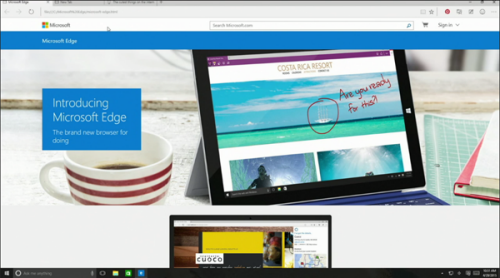
So it was high time for a clean-sheet redesign — a whole new browser from the bottom up. And with Windows 10, we get it, in the form ofMicrosoft Edge. (Yes, Microsoft wants us to keep that “Microsoft” in there, just as Google does with “Google Chrome.”) Here’s what we think you’ll find most exciting in Microsoft’s brand new browser.
Out with the old
First, here’s what’s not in Microsoft Edge: A slew of old technologies that are no longer common on the Web. They include:
ActiveX: HTML 5 replaces ActiveX controls. However, Microsoft Edge will still support Adobe Flash—which may or may not be good news.
Browser Helper Objects (BHOs): HTML and JavaScript replace BHOs, which date back to the COM object days of the 1990s.
VBScript: JavaScript replaces old Visual Basic code.
Vector Markup Language: Microsoft’s old XML language for 2D graphics has been replaced by Scalable Vector Graphics.
What’s all that mean to you? Faster load times (since the browser isn’t uselessly checking for instances of standards that aren’t there anymore). If for some reason you do need to load a page that uses any of these old technologies, you can still use IE; it’s still be there on your Windows 10 system.
New rendering engine
Microsoft Edge will come with a new rendering engine (Microsoft EdgeHTML) to replace the Trident engine that powered Internet Explorer for decades. The result should be that webpages appear on the screen a lot faster.
Better security
Microsoft Edge does a bunch of little, behind-the-scenes things to make browsing the Web safer. For example, it renders each individual page inside a “sandbox”—so if there happens to be malicious software on a page, it won’t be able to break out of that page’s browser process to do anything like access your hard drive.
Microsoft Edge also implements some new Internet security standards, including HTTP Strict Transport Security (to make Web connections more secure) and HTML 5 Content Security Policy (to protect against cross-site scripting attacks).
Bing and Cortana
Not surprisingly, Microsoft Edge is tightly integrated with Microsoft’s Bing search service and with Cortana, Windows 10’s new virtual assistant. That combination should make finding the information you need a lot faster and easier.
So, just as the URL bar in Google’s Chrome browser quickly connects you to Google‘s search tools, so isMicrosoft Edge optimized for finding online stuff with Bing. It’ll also improve search results by inferring what you may want or need based on previous searches and your browsing history.
And thanks to Cortana’s support for natural-language queries, you’ll be able to type questions into Microsoft Edge’s address bar and get back answers immediately, without having to perform a full Web search.
Easier extensions
Internet Explorer supported browser extensions, but Microsoft Edge improves that support. That’s because the new browser’s extensions can be built on the same JavaScript and HTML code that developers already use for extensions that work with Google Chrome and Firefox. Microsoft claims that extensions for those other browsers will be convertible to Microsoft Edge with only a few tweaks.
That should mean more/better extensions and add-ons for you.
The only bad news: Microsoft Edge won’t have this revamped extension support when Windows 10 initially launches. It will come via an update at a later date.
Annotations
Everybody shares links, but Microsoft Edge adds the ability to mark up those shared webpages with the electronic equivalent of sticky notes and highlights.
Tap the Make a Web Note button on the Microsoft Edge toolbar, and you can leave notes on a page for others. The Save button will allow you to save the note to Microsoft OneNote, your bookmarks, or your reading list; you can also use the Share button to share your marked up note.
NEW YORK - Microsoft Corp reported a $3.2 billion quarterly net loss, its biggest ever, as the company wrote down its Nokia phone business and demand fell for its Windows operating system.
The company took a charge of $7.5 billion in the fourth quarter related to the restructuring of its Nokia handset business, which it bought last year.
Microsoft’s shares fell 4 percent to $45.38 in extended trading on Tuesday.
Under chief executive Satya Nadella the company has been shifting its focus to software and cloud services as demand for its once-popular Windows operating system slows.
Sales of Windows to computer manufacturers to install on new PCs fell 22 percent in the quarter. The company is scheduled to roll out Windows 10 on 29 July, a much-awaited launch after a lacklustre response to Windows 8.
Microsoft wants to generate revenue by building search and gaming into the Windows 10 interface, Chief Financial Officer Amy Hood said in April.
Bing, the company’s online search engine, will be profitable in the year ending June 2016, Hood said on Tuesday.
Sales of Windows to businesses fell 21 percent from the year-earlier quarter, when demand for the operating system had surged after Microsoft discontinued support for Windows XP.
Revenue from Microsoft's commercial cloud business, which includes offerings such as Office 365 and Azure, rose 96 percent, excluding the impact of a strong dollar.
Microsoft said it added 3 million subscribers for Office 365 in the quarter, taking the total number of subscribers for the product to 15.2 million at the end of June.
Microsoft reported a net loss of 40 cents per share for the quarter ended 30 June. The company had posted net income of $4.61 billion, or 55 cents per share, a year earlier.
Microsoft also took a charge of $940 million related to job cuts announced this month and last year.
Excluding items, the company earned 62 cents per share.
You can check out apps for Windows PCs and phones at Microsoft's new universal app store. Microsoft/screenshot by Lance Whitney/CNET
Microsoft has renovated an online store that combines its Windows Store and Windows Phone Store into one big virtual shopping mall.
The newly redesigned app store is part of the company's attempt to unify the Windows 10 experience across all devices -- PCs, tablets and mobile phones. In the past, Windows PC and tablet owners looking for apps would have to browse the Windows Store, while Windows Phone users would have to check out the Windows Phone store. But now this one-stop shop is geared for everyone.
The store is a step in the direction toward a true "Universal App" store, which would offer apps for all types of Windows devices and other gear, including the Xbox gaming console. A spokesperson for Microsoft confirmed that the site lets you browse both Windows apps and Windows Phone apps but said that it's not the new "unified Windows Store." The true "Universal App" store has yet to open its doors.
Offering a common experience to Windows 10 developers and users alike is a key part of Microsoft's strategy for its new OS. With universal apps, Windows developers can create an app once using the same core programming code and then simply tweak the app to run on PCs, tablets and phones. That process will cut down on development time and expenses, which Microsoft hopes will encourage developers to create apps for both Windows PCs and mobile devices. In turn, users could benefit by having a greater variety of apps available no matter what device they use.
And what's the advantage to Microsoft? With the PC market in a slump and Microsoft's smartphone sales in dire need of a jumpstart, the company needs universal apps and Windows 10 in general to succeed. A user who likes the Windows 10 features and apps on a PC or tablet might be more persuaded to purchase a Windows 10 mobile phone to get a similar experience. It may be a long shot, but it's the best hope Microsoft has at this point to generate greater demand among PC and mobile phone buyers.
Beyond PCs and mobile devices, Microsoft's Xbox console is also part of the universal app movement, so Xbox game developers can use that common code to create games.
From the current store's homepage, you can scroll down to view the top Windows apps and Windows Phone apps. You can click on the Store menu at the top, drill down to Apps and then view all apps or view those for the Xbox. You can also look for a particular app by typing its name in the search field at the top of the page.
Clicking the name of a specific app brings up its description page where you'll see details about it along with ratings and reviews. For now, the store is a work in progress. You can browse or search for apps through the store but you can't actually install apps from the website, either directly or remotely to your device, the way you can with the Google Play store. To install apps for now, you still need to open the Windows Store on a Windows 8.1 or Windows 10 device or the Windows Phone Store on a Windows Phone handset.
The ability to directly install apps may appear once Microsoft launches its true Universal App store at some point in the future.
Microsoft is planning a big round of layoffs centered on its struggling mobile phone business.Microsoft
Microsoft is cutting more employees and restructuring its mobile phone business, in a costly maneuver as it continues to struggle in the smartphone market.
The software giant announced Wednesday that it will lay off 7,800 workers, most of them in its moribund smartphone unit, which it bought from Nokia last year to the tune of slightly more than $7.2 billion. That number represents about 6.5 percent of the 118,584 employees Microsoft had as of March 31.
The company also said that as a result of the layoffs and restructuring, it will record a charge of around $7.6 billion related to assets it took aboard through its acquisition of the Nokia Devices and Services business, along with restructuring expenses of approximately $750 million to $850 million. In a nutshell, that means Microsoft paid too much for Nokia's phone business based on how the unit is performing now, and the company wants to write off some of the now "worthless" assets.
Microsoft isn't giving up on mobile phones, but rather is still finding its way.
"I am committed to our first-party devices including phones," Microsoft CEO Satya Nadella said in a statement Wednesday. "However, we need to focus our phone efforts in the near term while driving reinvention. We are moving from a strategy to grow a standalone phone business to a strategy to grow and create a vibrant Windows ecosystem that includes our first-party device family."
Last month, Microsoft announced that Stephen Elop, the former CEO of Nokia who headed Microsoft's devices group, was leaving the company. Joining him on the exit line was former Nokia executive Jo Harlow, who reported to Elop.
Microsoft has long been trying to make a greater dent in the smartphone market, one of the reasons it acquired Nokia's handset unit. But it is mired in a distant third place in the smartphone market, with a 2.5 percent share that's going nowhere, far behind Apple and Android.
The company meanwhile is looking to Windows 10 as a white knight that will run apps across all manner of devices and bring new features and a new look to PCs, tablets and mobile phones. The operating system, set to launch July 29, is designed to offer a more unifying experience among computers and mobile devices. So Microsoft is hoping that consumers who like Windows 10 on their PCs or tablets may be more drawn to mobile phones with the same software.
But even if Windows 10 is a stunning success, carving out a greater chunk of the mobile market is a huge challenge. Although Microsoft remains a significant software maker, with one version or another of Windows running on more than 90 percent of the world's computers, it has stumbled for years in the mobile phone market and has yet to find a spark as developers and consumers alike remain fixated on Apple's iPhone and on Android phones from Samsung and others.
The new layoffs are in addition to the 18,000 employees that Microsoft said it planned to lay off a year ago, according to sources who spoke to the New York Times, which earlier reported on the impending layoffs. Most of those cuts were targeted to the struggling Nokia division as well.
This round of layoffs had been expected. In an email distributed to employees last month, Nadellamentioned the need to make some "tough choices," a phrase that often implies upcoming job cuts.
With Nadella at the helm, Microsoft has been trying to transform itself from a traditional software company into one that focuses on cloud-based services. Nadella's mantra has been "mobile-first, cloud-first," and he has been keen on empowering Microsoft's mobile operations. But the Nokia purchase may have been more than the company could handle. Microsoft added around 25,000 employees to its ranks when it took over Nokia's mobile phone business. And now with mobile phone sales still in the dumps, more of those employees may be looking for other jobs.
Microsoft said it expects that the layoffs will take place over the next several months and that the writeoffs announced Wednesday will be completed by the end of its fiscal year in June 2016.
Windows 10 may be released to manufacturers by July.screenshot by Lance Whitney/CNET
Microsoft may have to work overtime to launch the consumer-ready version of Windows 10 before the summer winds down.
The software giant has already announced that the next generation of its operating system will roll out sometime this summer -- in other words, by mid-September -- but no specific date or month has been revealed. In April, Lisa Su, the CEO of Advanced Micro Devices, accidentally spilled the beans when she said that Windows 10 would debut in late July. The assumption was that she was referring to the final consumer version.
In a tweet on Wednesday, known Russian leaker Wzor said that the release of Windows 10 RTM has been confirmed for July 2015. RTM, or release to manufacturing, is the version of operating system software sent to PC makers and other manufacturers to test and install on their devices before it officially rolls out. The final consumer release typically doesn't appear until months later, after manufacturers have had time to put the RTM version through its paces, scouring for last-minute bugs.
Here's the challenge. Assuming Wzor is right -- and though he didn't cite any sources for his comment, he does have a good track record -- Microsoft won't have much time between Windows 10 RTM and the final version to make any necessary changes. In 2012, Microsoft's RTM of Windows 8 arrived in August, with the final version then following in October. In 2009, Windows 7 RTM popped up in July, and the consumer version came in October. So if Microsoft plans to stick to its plans for a summer release of Windows 10, it may have only a few weeks at most between RTM and the final version.
Microsoft is counting on Windows 10 to erase the bad karma of Windows 8, which turned off many PC users with its touch-screen and tablet-focused environment, among other factors. Toward that end, the company has been asking people to test the Windows 10 Technical Preview and offer comments and suggestions. Based on some of the feedback, Microsoft has been tweaking and enhancing Windows 10 for the past several months with the aim of getting it just right. But could the company end up rushing Windows 10 out the door just to meet the summer deadline?
The Windows 10 Technical Preview has been out since last September. During that time, users who've signed up for the Windows Insider Program have already been giving the operating system a good workout. As a result, Microsoft has released new builds of Windows 10 at least once a month. And each new build has shown off not just new features but improvements and refinements from the previous one. Still, there is more work to be done.
Released last week, the latest build, numbered 10122, shows a Windows 10 with a sleek interface, enhancements to the Start menu/Start screen and tweaks to the new Microsoft Edge browser. But there's still a certain roughness to the overall OS with certain features not yet working as expected. So Microsoft will certainly continue to create and issue more builds until the OS is as rock solid as possible.
Here's a good question: Why doesn't Microsoft just wait until October to release Windows 10, as it has with prior versions of Windows? The company is likely eager to move people away from Windows 8 as soon as possible. Windows 10 is also Microsoft's attempt to offer a more unified experience among desktop and mobile devices, the goal being to attract more consumers to Windows PCs, tablets and phones.
Microsoft must believe that with further refinements, Windows 10 will be ready quickly. It had better be. The company can't afford another misstep in the wake of Windows 8.
One (of many) app in the Windows Store lets users illegally stream pirated copies of popular films and television shows, including a few like "Furious 7," which still haven't been officially released on DVD or online.Screenshot by Dan Ackerman/CNET
Open up Microsoft's Windows Phone Store and search for Super Mario, the classic Nintendo game series notoriously absent on mobile phones, and you'll find games using Nintendo's images, Nintendo's trademarks and perhaps an entire copy of the original video game.
There's just one problem: None of those apps is made or sanctioned by Nintendo.
Microsoft has a copyright issue, and it's not a new one. Its software storefronts have long been plagued by scams in the form of misleading apps and products that blatantly steal from well-known, popular and copyrighted TV shows, movies, music and games.
In April, CNET contacted Microsoft about this issue after finding a $5.99 app in the Windows Store that will illegally stream the hit HBO show "Game of Thrones." Microsoft, which said at the time that it takes intellectual property infringement seriously, removed the problematic Game of Thrones app. Othersstill exist.
Microsoft reiterated its position on intellectual property infringement when we contacted it for this story.
With Windows 10, Microsoft promises apps that will work across multiple devices, all downloadable from a single store.Microsoft
The world's largest software maker has said it's increasing enforcement of its app stores to to cull scammy apps that trick users into thinking they're downloading the real Spotify streaming music player, for example; knockoffs that take free services like Facebook's Messenger and slap price tags on them; and outright copyright infringers like the "Game of Thrones" program. But its enforcement efforts seem to be lagging behind the scammers', creating an embarrassing situation for Microsoft and undermining the credibility of its stores.
The situation comes at one of the most important moments in the software giant's history.
Microsoft's app stores will be a key part of its planned rollout for a new version of Windows, expected to be released sometime this summer. Windows 10, the first major Windows release under CEO Satya Nadella, is being touted as an overhaul of the operating system that promises better ways to perform tasks across various devices, a sleeker and more secure Web browser and a back-to-basics look and feel that marries the popular Windows 7 OS with more modern design.
To woo developers who may already be devoting most of their effort on apps for Apple's iOS software or Google's Android platform, Microsoft says apps built for Windows 10 can be modified to work on a smartphone, tablet or computer with relatively minimal effort. As part of its Windows revamp, Microsoft is combining two of the app stores it runs, one for smartphones and the other for PCs and tablets. That way, developers -- and consumers -- can view the Windows Store as a one-stop-shop for software that works everywhere.
But copyright-infringing apps could undermine the stores' integrity and create a confusing and sometimes predatory experience for users. To be sure, Microsoft isn't the only company to struggle with piracy and copyright issues. Apple, in its App Store, and Google, with its Google Play store, have also let software slip by that infringes on copyrights, violates their or another company's terms of service or otherwise makes finding app more difficult.
But the problem appears worse on the Windows Phone Store and on the general Windows Store for tablets and PCs. It's easy to find programs in Microsoft's app stores that illegally display hit shows like "Game of Thrones," "Breaking Bad" and "The Simpsons."
Another app called Freeflix helps users watch thousands of movies. The ad-supported app is free and borrows shamelessly from streaming service Netflix, paraphrasing its name and copying the red accent colors of its service and the look of its logo. The app offers pirated versions of films, including "Furious 7" and "Chappie," that hit theaters just two months ago. Excited fans can preorder the movies from retailers like Amazon.com or Apple's iTunes, or they can illegally watch right now using Freeflix to stream a copy from their PCs or mobile devices.
Freeflix's streaming mechanism remains unclear, but it advertises both older films and those that have yet to be released legally on DVD or competing online platforms like Apple's iTunes.Screenshot by Dan Ackerman/CNET
The free version of Freeflix has more than 1,000 reviews and a five-star rating on Microsoft's store. An $8.99 version of the app, called Freeflix Pro, removes ads in the software.
Microsoft receives a 30 percent cut on all proceeds generated through apps downloaded from its Windows app stores.
The creator of Freeflix, a developer by the name of Tony Bits, can't be contacted through Microsoft's storefront. But Bits has created a dedicated website advertising Freeflix, which isn't available on Apple's App Store or the Google Play store. Attempts to speak with the owner of the website were unsuccessful at the time of publication.
The quest for developers
Microsoft's universal app store is key to its ambitious efforts for the next version of Windows. By 2018, the company hopes to have 1 billion devices running its software, and will rely on that single app store for downloading Windows programs.
Microsoft hopes its one-software-that-runs-on-many devices approach will also help make its software for smartphones more popular. Android and iOS are the most popular mobile operating systems in the world, thanks to top top-selling smartphones and tablets from Samsung and Apple.
Microsoft's Windows Phone software is soon to named Windows 10 Mobile, but a name change is unlikley to help the platform's paltry 2.7 percent global market share. The big problem? Not enough apps.Andrew Hoyle/CNET
Though Windows runs on more than 90 percent of PCs in the world, Microsoft's Windows Phone software powers less than 3 percent of smartphones.
To help boost its market standing, Microsoft launched a campaign in March of 2013 that paid developers from $100, up to $2,000, for each app made for its platform. Though the campaign has since ended, the company continues to court app makers. At its annual Build developer conference last month, Microsoft announced tools for iOS and Android developers to more easily move their apps to the Windows platform, another incentive.
But Microsoft has had trouble convincing some top-tier app makers to offer their programs on Windows. Photo-sharing app Instagram wasn't available on Windows Phone until November 2013, three years after its release on Apple's iPhone. Meanwhile, Snapchat, a popular messaging service, has yet to release its app for Windows devices.
In its place, developers have created apps that plug into Snapchat's programming to replicate portions of its software. Microsoft has removed some copies at Snapchat's request.
Meanwhile, Google continues to withhold its Google Apps for Windows-powered devices after the two companies publicly fought two years ago over the use of ads and other features in the official Windows Phone app. Google Apps apps include the official YouTube video app and Google Maps.
Where does that leave Microsoft? Struggling to keep away bad apps that are taking advantage of the lack of policing from the company and a dearth of official software from popular companies.
"I have to think they're going to attempt to right the situation," said Brian Blau, an analyst with research firm Gartner. "I suspect Microsoft would rather have high quality apps than lots of them."
A slow fix
Microsoft began the cleanup process in August 2014 following a How-To Geek article calling its stores a "cesspool of scams."
Two weeks later, the company pledged to do a better job cracking down on misleading apps, or software that piggybacks off popular search terms such as "Firefox," the name of Mozilla's Web browser, and "VLC," the popular cross-platform video and music player. When people downloaded software with those labels, sometimes for as much as $10 each, what they got was apps that either weren't made by the companies -- or apps that didn't work.
Microsoft announced rules to cut down on copycats that established restrictions on naming and categorizing apps and detailing the type of logo developers can use to advertise their software. The company also removed more than 1,500 apps that didn't comply with the changes.
"The Store review is ongoing and we recognize that we have more work to do, but we're on it," said Todd Brix, Microsoft's general manager for Windows apps and stores, at the time. "We're applying additional resources to speed up the review process and identify more problem apps faster. No approach is perfect, so we encourage people to report any issues they may encounter with Windows Store."
Nine months later, the Windows Phone Store and standard Window Store look noticeably cleaner, with popular apps like Facebook, Netflix, Evernote and King.com's Candy Crush Saga puzzle game featured first on a search result page that's no longer filled with rows of knockoffs.
But a closer examination of the two app stores reveals that, while scams and knockoffs may be in decline, copyright-infringing apps remain easy to find. CNET started noticing the influx of these apps while reviewing Windows 8.1 computers such as the Microsoft Surface 3 and Acer Revo One. These lower-power PCs can benefit from applications optimized for Windows 8.1, which gives users more incentive to download software from Microsoft's store and not simply over the Internet.
Microsoft hasn't provided thorough details regarding how it approves apps for its stores. The company has said it has a team, not simply algorithms, who test and oversee apps. Microsoft also says it enforces its trademark and copyright guidelines, and that its certification process has a so-called content compliance period. That means Microsoft will withhold an app from being published for varying lengths of time "depending on how complex your app is, how much visual content it has, and how many apps have been submitted recently."
"We also conduct spot checks of apps after they've been published so we can identify potential problems. If we find any, you'll be notified about the issue and how to fix it," Microsoft advises in its guidelines.
Gaming apps: the worst offenders
Video games are an especially thorny area when it comes to copyright. It's impossible to protect certain game ideas from being ripped off by competitors, leading to clones, or closely copied reproductions of a game wrapped up in slightly different art.
In the case of Super Mario, a search for the phrase on Apple's App Store turns up apps like World 1-1, a clear reference to the way Nintendo names the playing levels in the game. The game itself has players control a pizza delivery boy running from aliens. Google fares worse, with a sprinkling of games using the Mario trademark in their name and some inventive titles like "Super Jario," but few if any contain anything resembling stolen art or other in-game material.
Whether using Nintendo art, Nintendo's trademarks or full versions of Nintendo games, these apps are easy to find in the Windows Phone Store.Screenshot by Nick Statt/CNET
The app's publisher is listed as "Mine-craft," but attempts to get contact information for the company proved unsuccessful through any of Microsoft's channels. (The publisher is not be confused with Minecraft, the official pixel-art building game published by Swedish developer Mojang, which Microsoft purchased last fall.)
Other games can be found using similar naming schemes from the same developer, including "Despicable Me: Super Mario Surfers Pocket Edition," which contains copies of official Mario games that can be played from within the app. Other apps either use Mario in its title, use Nintendo art or are advertised directly as if they were the originals. One example: Super Mario RPG.
Nintendo has resisted releasing official versions of its games on mobile phones, choosing instead to partner with Japanese social gaming company DeNA to release titles based on its popular franchises in the coming years.
Nintendo did not immediately respond to requests for comment.
While these apps hurt the intellectual property of large corporations, smaller game developers are also suffering from Microsoft's lack of oversight. In February, independent developer Red Hook Studios used Twitter to inform fans that its latest game, Kickstarter-funded Darkest Dungeons, had been illegally copied and uploaded to the Windows Store.
The purported creator, listed as Balaji Chowdary, didn't include Red Hook Studios' name in the app description and asked $3.99 for the game. Red Hook Studios charges $20 to access its official version through a competing online marketplace run by Valve. It's unclear if customers who purchased Chowdary's knockoff were given access to the full version of the game or were simply victims of a scam.
Redhook filed a copyright infringement ticket through Microsoft, which reportedly began addressingthe knockoff app immediately. It's no longer in the app store, nor is any other piece of software from Chowdary.
Though it was resolved fast, the incident is emblematic of the hurdles Microsoft may face as it strives to convince developers -- as small as Red Hook Studios and as large as Snapchat -- to prioritize for its platform. And if copyright holders can't rely on Microsoft to protect intellectual property, the universal Windows store won't ever come close to Apple's or Google's stores in market share or reputation.
If or when Microsoft begins a more widespread crackdown, it won't have to look hard for offenders.