Pages

Thursday, 23 April 2015

YouTube turns 10: The video site that went viral

10-years-of-youtube-old-tv-3.jpg
YouTube now attracts more than 1 billion users a month.James Martin/CNET
Ten years ago today, a startup called YouTube uploaded its first video.
Co-founder Jawed Karim, in a private test of the fledgling service's capabilities, posted a short video of himself at the San Diego Zoo. The 18-second clip shows Karim unenthusiastically noting how elephants have "really really really long, um, trunks. And that's cool. And that's pretty much all there is to say."
Actually, there's a lot to say. From that modest beginning, a mammoth has evolved.
It's difficult to overstate just how big YouTube is: By the time you finish watching Karim's "Me at the zoo," other YouTube viewers around the globe will have collectively watched more than seven years worth of video. In the time it takes to watch that test video two more times, about 12 days of footage will have been uploaded to Google's video site.
Today, YouTube attracts more than 1 billion unique visitors a month -- or one out of every seven people on the planet. And that audience is helping create online stars. Today's fastest-rising celebrities aren't coming out of Hollywood. They're teens hamming it up or breaking it down in front of the computer to create a new kind of entertainment.
"No one organization has done more for creatives in the whole history of humanity than Google or YouTube," said Will Keenan, who heads the US digital division of television production giant Endemol.That dominance wasn't a foregone conclusion. In 2006, Google paid $1.65 billion for YouTube, which was founded by Karim along with entrepreneurs Chad Hurley and Steve Chen. The sheer might of its parent, though, didn't guarantee success. (How frequently do you check your Google+ social network, for example?) Several factors early in YouTube's existence played out in its favor and set it on the path to becoming the biggest media platform on the planet.

Utilitarian start

YouTube's main attraction at first wasn't the videos you could watch but the files you could store online. The founders wanted to create an easy way to share videos, not necessarily a place to sit back and let others watch them. At a time when video files were large and online storage capabilities for them were scarce, YouTube's appeal was in its role as an early version of now popular cloud-based service Dropbox.
screen-shot-2015-04-22-at-6-59-53-pm.png
YouTube started with a guy at the zoo.Screenshot by Richard Nieva/CNET
"People were already videotaping at that time, but they had no way to store that content," recalled Zefr CEO Rich Raddon, whose company helps studios manage their copyrighted material on YouTube. "It was more of an archivist point of view."
Here, Google's resources were key.
"They were really able to benefit from Google's scale," said Laszlo Bock, Google's head of human resources. Bock started at Google in 2006, the same year the search engine bought YouTube. For Google, the challenge was finding a balance between getting involved enough to be helpful but not a hindrance.
One of Google's perks was its arsenal of technology. The infrastructure needed to sustain heavy usage was daunting for a startup but not for one of the Internet's biggest companies.
"It was necessary that the platform got bought early by Google because the sheer costs to store and code and stream all that video were massive," said Raddon. Google's data centers around the world distributed content to make it quick to access so viewers didn't have to wait for videos to load. "When you hit play, there isn't that much buffering because that content had been spread out, localized throughout the world."

The un-TV

YouTube was one of many sites striving to be the the Web's home for free video. One way it set itself apart was by letting its users figure out what the site should be, rather than prescribing that YouTube should feel like "real" television.
"A bunch of services out there, they really thought they were going to be TV," said Jim Louderback, who ran multichannel network Revision3 and is now an editorial director of the VidCon conference on online video. "YouTube looked at themselves and said, 'What's going to make it easy for people to share video? We're going to let it be what it is."'
That democratic approach extended to elements reminiscent of social networks. Unlike the inherent distance that rests between TV and its audience, performers and viewers on YouTube could form interactive online communities. YouTube's most successful "creators" quickly learned that being accessible and authentic on the platform was crucial for building a fan following.
In fact, some of YouTube's most memorable videos are of a tearful teen defending Britney Spears and a gangly graduate student singing a song called "Chocolate Rain" in a Barry White-like voice.
"It was a platform that was built for us and populated by us," said Bing Chen, YouTube's former head of global creator development and management. "Suddenly it became the most social platform in the world." Chen left YouTube last year to start a company called Victorious, which helps creators launch mobile apps to help promote themselves.

All the world's stage

While YouTube's initial appeal was as a place to upload content, it didn't take long for it to become a site predominantly for watching video. YouTube began to take shape as a platform for publishers, with the most successful often being people with no background in the traditional media world.
The launch of the YouTube Partner Program in December 2007 was a turning point for the service's evolution into a platform for performance. The Partner Program is how YouTube shares revenue from advertising that plays against a video with the person who uploaded it.
Five years later, YouTube opened that program up from allowing just the producers of very popular content to join, to letting in anyone who wanted to try to make money from their videos. The program went from 30,000 partners to millions within a few months, said Chen. "It opened up the floodgates."
Louderback said his Revision3 channels had deals with a slew of competitors, sites like Metacafe and Dailymotion, but YouTube was the only one that ever seemed to pay up. "When somebody sends you a check, you're more likely to keep working with them," he said.

The second decade

YouTube is spending the month of May celebrating the 10-year mark of its beta site launch.
As YouTube embarks on its next 10 years, it faces more competition than it's had since those early days. Ad dollars are migrating online, and rivals like Facebook and new ventures like Vessel are beefing up Web video efforts to eat some of YouTube's lunch. Though Google doesn't disclose terms, and those terms vary by creator, the site generally is known to share 55 percent of revenue from ads run against an partner's videos.
But for now, with more than a billion people visiting the site every month, YouTube isn't sweating it.
"Unless the Internet breaks, YouTube isn't going anywhere," Keenan said.

Wednesday, 22 April 2015

Now Google lets you save your search history

Google will allow users to download their search history — a handy tool if you've ever wanted a closer look at what really makes you tick online.
The details of the functionality are outlined in a Google support document, which breaks down exactly how anyone can save their list of searches.
First, visit history.google.com/history when you're logged in to your account. Then look for the options icon, and click download.
You'll be prompted to create an archive, and your history will begin downloading — it's as simple as that. The archive will be saved to your Google Drive in the form of a zip file that can be saved to your desktop computer.
Of course, you'll need to have your search history option turned on for the feature to work. If you've opted out of keeping a record of your search history, you'll find nothing available.
One blogger noticed early testing of the feature last year, and pointed out the wider availability over the weekend.

Google's wireless service expected to launch soon, report says

Google's wireless service is expected to launch as early as Wednesday.CNET
Google has been readying its own wireless service for smartphones, and it could launch in the US as early as Wednesday, according to a report by The Wall Street Journal.
The service, which would compete with local wireless providers like AT&T and Verizon, is expected to let customers pay only for the data they use on the network. That would mean users only pay when they make calls, listen to music or use apps, as opposed to common wireless service agreements that charge a bulk rate for a certain amount of data.
What Google wants to do is somewhat unique, according to the Journal's report. The company plans to offer two types of services that overlap. When users are on Wi-Fi, their phone calls and other data would use that connection. When not on a Wi-Fi signal, customers would use common cellular radio signals, which are more costly.
Google isn't building its own wireless network to do this. Instead, the Internet giant has reportedly made a deal with US carriers Sprint and T-Mobile to use their networks. For now, this scheme is only expected to be available on Google's Nexus 6 smartphone.
A Google spokeswoman declined to comment.
Google's new wireless service underscores its ever-growing ambitions in the wireless industry. The company began its efforts in 2005, when it purchased the nascent Android mobile phone software and began giving it away to handset makers such as Samsung, LG and Lenovo. Today, Android powers more than 80 percent of the world's smartphones and commands significant influence in the wireless industry.
The next step for the search giant is to expand into how the cellular and wireless connections themselves are delivered to you.
For wireless companies, Google's entrance to the market is potentially worrisome. Google, with its resources and influence, has the power to shake up the entire industry.
When Google product chief Sundar Pichai confirmed the wireless service in February, he sought to reassure the carriers. He said Google's wireless service was meant to be a small scale experiment. Google's rationale is said to be in trying to innovate new practices and pricing models and trying to get the wireless industry at large to follow suit.
Wireless service isn't the only industry Google's hoping to upend. The company began taking on the home-and-business Internet service providers in 2010 with a project it calls Google Fiber. The service offers Internet connections to people's homes in cities like Kansas City and Austin for much less than larger rivals Comcast, AT&T and Verizon charge.
Google is also hoping to bring its service efforts to developing countries. The company has been building a way to beam Internet connectivity to rural populations via high-flying balloons with a project called Loon. Google is also experimenting with satellites for the same purpose.

Monday, 20 April 2015

Russian hacking group reportedly exploited Flash, Windows

134367529.jpg
The hacking group reportedly exploited security holes in Adobe's Flash and Microsoft's Windows.Getty Images/Ikon Images
A group of Russian hackers has been using flaws in two popular pieces of software -- Adobe's Flash and Microsoft's Windows operating system -- to try to get information about other governments, according to a report published by FireEye, a well-known United States security firm.
FireEye in October said the group, called APT28, is after information about governments, militaries and security organizations -- including the US and other diplomatic targets -- that would "likely benefit the Russian government."
One of the ways it has been doing that has been to exploit security holes in Windows, the top operating system for desktop computers, and Adobe's Flash, which lets you see animations and designs on the Web. Reuters earlier wrote about the FireEye report.
Adobe has already issued a fix and Microsoft is currently working on one, according to FireEye. The Microsoft problem is reportedly less dangerous because it involves "enhanced powers" on a computer that an ordinary user would not have, according to Reuters.
Adobe and Microsoft did not immediately return requests for comment.
Cybersecurity has become a top of mind issue not only in Silicon Valley but across all other industries. Part of that is thanks to high-profile attacks in recent years against governments, newspapers and big companies. A devastating hack of Sony Entertainment in November revealed embarrassing secrets about the company, including financial data, information about its executives and plans for upcoming projects. Some, including the FBI, blamed the hack on the North Korean government.
The report comes a day before the beginning of the RSA conference in San Francisco, the US's largest confab of companies and experts from the cyber security industry.
APT28 has been at it since 2007 and allegedly has a government sponsor based in Moscow, said FireEye. Other security firms have tied the group to a breach in the US State Department, seeking information about President Barack Obama's travel schedule.

You Can Now Buy a OnePlus One Without an Invite

You Can Now Buy a OnePlus One Without an Invite
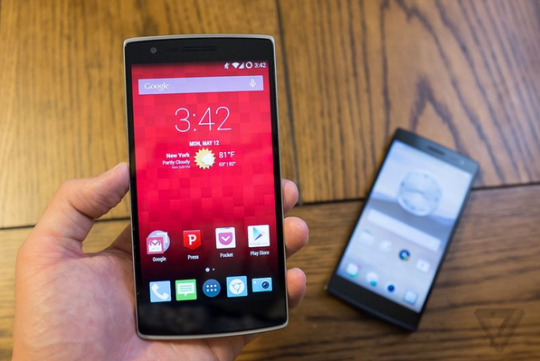
Last year, the OnePlus One made waves in the smartphone community by offering a high-end handset for just $299 off-contract. The only downside was just how hard it was to actually buy one, with the phone’s Chinese manufacturer OnePlus choosing to make sales of the One invitation-only. Not any more. To celebrate the first anniversary of the launch of the One, OnePlus is dropping its invite system to let anyone buy the handset. This isn’t a special offer or a limited deal — it’s forever. And yes, we know it’s strange to celebrate a smartphone simply going on sale in the normal fashion, but as we noted in our review of the One, this isn’t a normal product.
In a blog post announcing the news, OnePlus claims that the company has now sold more than 1 million handsets. However, they do add that the One’s successor, the OnePlus 2, will revert to the old invitation-only system when it goes on sale. This choice, says OnePlus, is made to minimize their risk when it comes to ordering components and making the handsets, something that subsequently allows for the company’s “razor-thin margins.” Let’s hope we see even more value with the OnePlus 2.