Pages

Showing posts with label Google I/O 2015. Show all posts

Sunday, 31 May 2015

The Next Wave of Wearable Tech Will Be Your Clothing

The Next Wave of Wearable Tech Will Be Your Clothing
(Google/Project Jacquard)
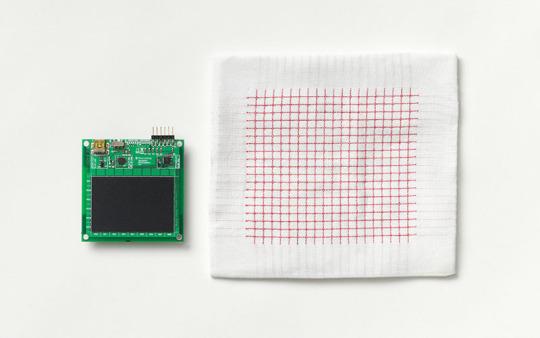
The next time someone tells you your outfit is looking smart, they may not just be complimenting your fashion sense. At its annual Google I/O conference, the company unveiled Project Jacquard, a connected fabric that can turn your entire wardrobe into wearable technology.
Coming out of Google’s Advanced Technology and Projects group (ATAP), Jacquard is the result of years of efforts to develop wires that look, feel, and act like actual yarn, can withstand the heat from irons, and can survive thousands of trips through the washer and dryer.
“The structure of textiles is the same as the structure of the touchscreens built into phones and other mobile devices,” says Ivan Poupyrev, technical program lead for Google ATAP. “If you replace some of the threads in textiles with conductive threads, you should be able to weave the textile into something that can recognize a variety of simple touch gestures.”
At the show, Google displayed swaths of cloth that responded to touch and other gestures.
By using smart thread, touch-sensitive areas can be woven into clothing. You could control the volume on your music player by swiping your finger on your pant leg, or answer your phone by touching your lapel.
But this is not just another wacky Google moon shot project that will never emerge from the lab. Today Levi Strauss announced it would be the first clothing manufacturer to integrate textiles developed via Project Jacquard into future lines of apparel. However, the companies did not announce a timetable for when such smart clothing would appear or what form it would take.
One thing that is clear: When it comes to smart clothing, Google hopes to loom large. 

Google: Your Hands May Be the Only Interface You’ll Ever Need

Google: Your Hands May Be the Only Interface You’ll Ever Need
Photo: Project Soli via YouTube
Wearable devices are getting smaller and smaller. Our hands and fingers are not keeping up. Which is one reason why the gearheads at Google’s Advanced Technology and Projects group (ATAP) have been working on a way to control devices using nothing but simple hand gestures.
If Project Soli becomes a reality, one day you may be able to control smartwatches, fitness trackers, and other devices using the same gestures you use on your smartphone, only without the phone, says Ivan Poupyrev, technical program lead for Google ATAP.
“Your hands are always with you and very ergonomic,” he told an audience at Google I/O. “They could be the only interface you ever need for controlling wearable devices.”
Of course, gesture-based interfaces already exist. Many, like the Kinect or PlayStation Move, use cameras to detect your hand movements. So they only work when there’s a clear line of sight, and they’re utterly worthless in the dark.
Google’s solution? Radar. The Soli chip blasts out radar signals from multiple antennae thousands of times each second. These create a field that can measure even minute movements of your fingers, detect when your fingers are crossed, or record signals from both hands at once.
From there, it’s a matter of software developers creating a vocabulary to interpret each gesture and translate it into an action, like deleting a message or taking a call on your smartwatch.
The new radar chip has a potential range of 5 feet or more, which could allow it to be integrated into all kinds of devices, including the walls of your home. In theory, one day you may be able to turn on the lights by snapping your fingers, or crank up the volume on your Sonos by turning an imaginary dial in the air.
image
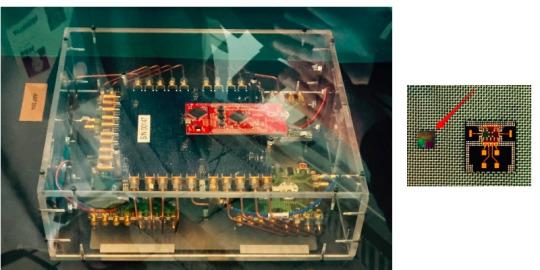
On the left, the original Project Soli prototype; on the right, the current chip (under the arrow). (Photo: Dan Tynan/Yahoo Tech)
Right now, Project Soli is just that — a research project. But its progress has been impressive. In just 10 months, Google’s prototype has evolved from a toaster-size circuit board to a chip that’s smaller than a toddler’s toenail. And the group has another eight months to go before the two-year project concludes.
Later this year, ATAP plans to open the device to developers to see what they can do with it. Google won’t necessarily build anything with the chip, but it may offer it as a reference design to manufacturers of smart devices.

Friday, 29 May 2015

Google Maps to Get New Offline Search, Turn-by-Turn Navigation Features

google_maps_navigation_google_play_screenshot1.jpg
Google, besides announcing a slew of OS updates and features alongside Android M at the Google I/O 2015 keynote event, also said it would soon be bringing offline search to its Google Maps app. The app will also feature complete voice-based turn-by-turn navigation while in offline mode. Both features will be made available sometime later this year.
The new offline features announced for Google Maps are aimed mainly for "emerging markets" where mobile Internet coverage is spotty, and data charges expensive, as navigation via GPS is independent of mobile networks. In the past, Google had introduced offline rerouting during navigation, which would reroute users even if they lose their Internet connection while navigating. Now, the entire process of navigation can be done when offline. The offline features are also useful for those users who are travelling to less-connected spots. The features will also come handy for those who are searching for directions when travelling in underground metros or via flight.
The offline search feature would enable users to search for places and points of interest, with results including autocomplete suggestions as well as reviews, contact numbers, opening hours and other information. The Google I/O 2015 keynote event saw the feature being demoed on a handset on Airplane mode and it seemed to work seamlessly.
Google launched its offline maps feature in 2012. The feature at that time allowed users to avail offline functionality in over 150 countries and save up to six large metro areas. The search giant last week rolled out native Maps app for Android Wear devices, alongside translucent status bar and other features.
Finally, Google at I/O 2015 also announced updates for its Google Places API for iOS, bringing it on par with Android with such new features as adding a place picker, current device location, detailed place information, search autocomplete, the ability to add places to Google's Places database, and more.