Pages

Showing posts with label 3D Printing. Show all posts

Sunday, 23 August 2015

3D printing: Where Chattanooga's past meets its future

CHATTANOOGA, Tennessee -- When Platt Boyd decided to quit his job as an architect and use his retirement savings to start a company that would construct buildings with a 3D printer, he didn't move his family to Silicon Valley or Brooklyn. He came here.
Branch Technology has built the largest free-form 3D printer, to print walls.CNET/Marguerite Reardon
Boyd had been an architect for 15 years, and he left his steady paycheck and company benefits at Seay, Seay, & Litchfeld Architects in Alabama to participate in Chattanooga's Gigtank accelerator, a 100-day program where startups come and get guidance from industry experts and business mentors with expertise in broadband and entrepreneurship.
Boyd and the three other members of his team could have come for the Gigtank experience and returned home after it ended in July. Instead, they decided to stay in Chattanooga and create a company, Branch Technology, here. For Boyd, the decision was an easy one. The 3D printing brain trust is in Chattanooga, and that's where he wanted to be.
"Honestly, it was a bigger decision to quit my steady job than deciding to relocate the company," he said.
Call it being in the right place at the right time. Chattanooga has spent decades transforming itself from a dirty industrial backwater to a future-looking technology hub. Today, it boasts the nation's largest ultrahigh-speed broadband network, known in the industry as a gigabit network, and a thriving startup scene. Leaders in Chattanooga's startup community saw 3D printing in particular as the perfect way to marry the city's manufacturing roots with the promise of tomorrow's technologies, which they hope will pave the way for sustained economic growth.
Check out all the places we've been on CNET's Road Trip 2015.
"We saw how the gigabit network could benefit 3D printing," said Mike Bradshaw, executive director of The Company Lab, a Chattanooga-based nonprofit, whose mission is to help entrepreneurs get their businesses off the ground. "And we thought, 'Do we want to let this just happen, or do we want to be a part of creating it?' We figured now was the time to jump in."

What do you do with so much speed?

Two years ago, the city-owned electric company EPB -- formerly known as Electric Power Board -- started building an ultrahigh-speed broadband network that delivers 1 gigabit per second downloads and uploads, which could let you download a full high-definition movie in 20 seconds, as opposed to 30 minutes on an average Internet connection.
But the city wanted to do more than just download movies, and it created Gigtank to answer the question: "If you had the world's fastest Internet, what would you do with it?"
3D printing was a good fit. The technology requires huge amounts of data to create a detailed three-dimensional design. It relies on cloud computing, where multiple computers are connected over a network to provide the necessary processing power to tell the 3D printer what to do. It requires a network with low latency, or the industry term for any delay with the data traveling across the network (low latency means less of a delay).
One of the benefits of 3D printing to industrial manufacturing is that the machines are able to adapt during the manufacturing process to correct flaws. A low-latency network like the one that Chattanooga has built ensures that all the machines can talk to one another without delay, which to a manufacturer greatly reduces mistakes and waste.
"Machines can adjust parameters over a low-latency network as its printing in real time," said Graham Bredemeyer, a self-taught 3D printing expert, who was recruited by Bradshaw to come to Chattanooga to help mentor startups as part of the Gigtank team. "Using other manufacturing methods, you might be forced to throw away the whole part and start over."
While Bradshaw and others immediately saw the fit between 3D printing and Chattanooga's network, 3D printing, which many believe to be the future of manufacturing, also dovetails nicely into Chattanooga's past. Since before the American Civil War, Chattanooga was an industrial hub of the South. It became a major center for steel and iron production used for shipbuilding. But as those industries started to go overseas and plants closed across the US through the 1970s and '80s, Chattanooga lost valuable manufacturing jobs and a part of its heritage.
Starting in the mid-'80s the city embarked on a revitalization effort that began with cleaning up its air and natural surroundings. Since then, the city has managed to attract industry once again. In 2011, Volkswagen opened its North American manufacturing headquarters here.

The promise of 3D printing

It's still early days in 3D printing, and Bradshaw said he and others recognize it may not be appropriate for all applications. That's why the companies chosen to participate in Gigtank must show a relevancy beyond novelty.
Bredemeyer noted that there are dozens of companies located in Brooklyn and Silicon Valley that are 3D printing all kinds of consumer goods. But he said there are few such companies focused on industrial- and commercial-grade manufacturing.
"It's not enough to just be able to 3D print something like a bottle opener or cell phone case," he said. "We need to ask what does 3D printing allow us to do in the manufacturing process that we couldn't do using a traditional process?"
Bredemeyer said Boyd's team at Branch Technology got this concept.
"They were asking not if they could 3D print a wall, but what does it offer that traditional construction can't?" he said.
Indeed, Boyd said that's the whole point of Branch. During his pitch at the Gigtank Demo Day in July, he described Branch's technique as a way to build like nature, eliminating the waste of traditional construction and allowing architects to design structures in shapes that were too costly to achieve using traditional construction techniques.
"One of the core advantages of 3D printing is that it allows for customization and complexity," Boyd said. "This means that we no longer have to accept boring, cookie-cutter designs. It really blurs the line between art and function."
Branch Technology has developed a technique it calls "Cellular Fabrication." It uses a 3D printer head attached to a 12.5 foot robotic arm from Kuka Robotics to free-form build a scaffold frame using a combination of plastic and carbon fiber. The robotic arm, which can travel up and down a 33-foot rail, can build a 3D skeleton of a wall that is 25-feet wide by 58-feet long.
The plastic scaffold weighs only a couple of pounds and then is filled with traditional construction materials, such as foam insulation and concrete to add support and strength. The final product is a wall that can support up to about 3,000 pounds.
Boyd explained that architects could send Branch designs that it would then use to 3D print the plastic frames. These lightweight pieces could then be shipped to construction sites, where they'd be assembled like Legos. Contractors would then use traditional building materials to fill in the scaffolding, and apply the proper finishes.
Boyd said this technique can reduce the cost of construction to between $80 to $140 a square foot. Compare this with the thousands of dollars a square foot it costs for most creative building designs, such as museums.
Branch is just one of five 3D startups to come through the Gigtank and make Chattanooga their homes. Another, Feetz, which 3D prints custom shoes, went through the program last year. Afterward, founder Lucy Beard relocated the company from San Diego, California, to Chattanooga.
Beard said her inspiration for the company came one day out of frustration when she was shopping for shoes. She struggled to find a pair of mass-produced shoes that fit. As she took a break from her search and had a latte, she wondered why she couldn't get custom-fitted shoes the way she was able to customize her coffee.
Feetz was born. Using a mobile app on a smartphone, customers take three photos of their foot, which they send to Feetz. The data is used to create a pattern custom-sized to each foot. And then, using 3D printers, the shoes are printed within hours and shipped out to customers. Prices range from $150 to $250.

'Shooting for the moon'

While the gigabit network is a key benefit for 3D printing applications and is one reason entrepreneurs come to Chattanooga, it's not the only thing driving the 3D printing community. Bradshaw has personally recruited 3D printing experts like Bredemeyer and others to relocate to Chattanooga.
There is also a significant amount of expertise in the 3D printing field just 100 miles away near Knoxville, Tennessee at Oak Ridge National Laboratories. This national laboratory, funded by the U.S. Department of Energy, is another center of innovation for 3D printing. Earlier this year, engineers demonstrated the first 3D printed car.
"The startup culture in general here and the proximity to Oak Ridge National Laboratories, was definitely a significant reason for relocating to Chattanooga," Boyd said.
Bradshaw says The Company Lab or CoLab, as it's commonly known, is exploring other ways to fuel the 3D printing startup community. He sees an opportunity in helping manufacturers figure out how and if 3D printing is right for them.
"The big question for companies now is what place 3D printing has within their manufacturing process," he said. "But figuring that out is time consuming and expensive."
Bradshaw said he would like to create a lab in Chattanooga where companies could come, bring their engineers and consult with 3D printing experts to study their own processes and experiment with 3D printing technologies to see if it could be used to improve their existing processes.
"We may be shooting for the moon," he said. "But we have to remember that for every trip to the moon there are many earthly things that must happen along the way to get you there."

Wednesday, 11 March 2015

How One Tech Firm Got 10,000 Dogs Running Again with 3D Printed Knee Implants

How One Tech Firm Got 10,000 Dogs Running Again with 3D Printed Knee Implants
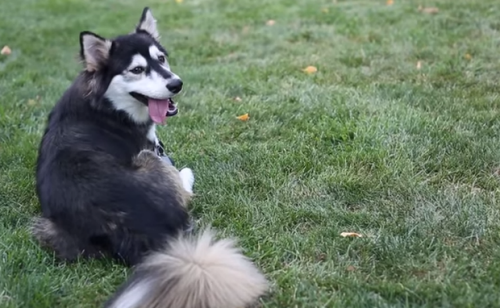
3D Systems built prosthetic legs for Derby the dog last year. Image: 3D Systems
You’ve probably seen the adorable story of Derby the dog, who was born disabled but received some incredible 3D printed prosthetic legs that allowed him to run again. The story went viral in late 2014 and, in many ways, changed how the world looked at the potential for 3D printing.
After all, when our beloved pups are involved, we begin to take things pretty seriously.
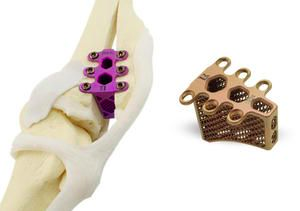
Little did the world know that 3D Systems, who made those prosthetics, had another advancement for dogs in the works. The 3D printing company partnered with Rita Leibinger Medical to create and print metal orthopedic knee implants to fix a very common, but difficult problem of injuries in dogs’ hind leg ligaments, often caused by trauma, degeneration, or genetics.
"With this implant we experienced faster, more successful surgery and a faster recovery period," Rita Leibinger, owner and founder of Rita Leibinger Medical, said in a press release.
To date, 3D Systems has made more than 10,000 of the implants, allowing the dogs to walk about six weeks after surgery, and it has made the process much more efficient for veterinarians as well.
The partnership between 3D Systems and Rita Leibinger Medical, which is headquartered in Germany, started in 2012. Peter Mercelis, technology and application developer manager at 3D Systems, said that Rita Leibinger Medical immediately realized the possibilities of 3D printing and started to work on improvement of the classic TTA (Tibial Tuberosity Advancement) implants and procedure to create TTA Rapid Implants 2. By reorganizing the bone force and making the knee more stable, the implant can fix the problem without the vet needing to repair the ligament.
The classic TTA surgical procedure involved the use of a large fixation plate, which is now obsolete because of the new developments in this technology. The titanium implant has an open structure that promotes rapid bone ingrowth, as well as less of a risk of infection.
TTA Rapid Implants 2 Image: 3D Systems
The new implants were developed by a small team of engineers from both companies. They went through about four design iterations “to improve the ease of the surgical procedure, the long term bone-ingrowth, and the appearance and the manufacturing costs,” Mercelis said.
Because 3D printing has such short lead times, those iterations could be done on a short-term basis, and sometimes in parallel. Dr. Yves Samoy, from Ghent University in Belgium, perfected the surgical procedure, and worked with 3D Systems’ manufacturing facility in Belgium to scale up the prototyping.
Of course, dogs aren’t the best at being patient and resting when they need to. So, every time one can get back to full speed after surgery, it’s considered a success story.
"The dog owners and even the vets are really surprised to see the dogs recover this fast from an orthopedic surgical procedure," Mercelis said.
Although much smaller than human healthcare, the animal healthcare market is a multi-billion dollar industry — and implant costs make up a huge portion of that. With 3D printing, the total cost of the procedure is reduced, and even better, it is also less invasive.
The TTA Rapid Implants 2 will also be more widely available, and the two companies are working on scaling them down for smaller dogs and cats, too. They are also working on other implants, which will become commercially available soon.
"The complex geometries, large size and weight differences of the patients are all in favor of 3D printing technology," Mercelis said. "3D Systems and Rita Leibinger Medical are currently already working on the next success stories, by developing several spinal implants."
Because we can all always use more dog videos in our lives, check out 3D Systems’ short video showcasing the 10,000 happy dogs that have benefitted from this new implant.

Saturday, 5 July 2014

3D printing helps surgeons save 5-year-old's life

  • by 
  •  
    surgery.jpg
    Hospital Sant Joan de Deu
    A practice surgical procedure on a 3D-printed tumor has helped surgeons successfully remove the tricky real one from a 5-year-old boy in Spain.
    The boy was diagnosed with neuroblastoma, a common form of cancer in children that typically occurs around the stomach. Because of the locations of these types of tumors, surgery to remove them requires copious skill to not slice an artery and put the patient's life in danger. After two unsuccessful attempts to remove the child's tumor, it appeared inoperable.
    "We tried the surgery twice but we failed because we could not access," head surgeon Jaume Mora said at a press conference Wednesday. "Instead of surrendering, we tried to find a solution."
    The team used a multi-material 3D printer to print hardened arteries and organs surrounding a translucent, soft resin so they could practice removing the tumor without damaging the boy's innards. They also built a tumor-free replica of the child's insides to see what he should look like once the cancer had been removed.Mora and his team at the Hospital Sant Joan de Deu in Barcelona turned to the CIM Foundation at the Polytechnic University of Catalonia to create a 3D-printed replica of the boy's tumor so they could perfect their technique ahead of the surgery.
    After undertaking a practice run a week and a half before the scheduled surgery, the surgeons successfully removed the tumor from the boy's body. And they're happy to report that they expect him to fully recover without the need for additional surgeries. In fact, the team and the hospital were so impressed with how the procedure went, they've commissioned 3D-printed models for two other patients.
    This case represents one of the first times a personalized, 3D-printed organ has been used to successfully simulate a surgery, though it almost certainly won't be the last. And it's once again excitingto see that technology commonly used to print jewelry, figurines, and iPhone cases can also help medical professionals save lives.

Friday, 9 May 2014

Man arrested for possessing guns created by 3-D printer

PTI
(File) - A gun created by a 3-D printer
For the first time, Japan police arrested a 27-year-old man here on suspicion of illegally possessing two guns created by a 3-D printer.
The suspect, Yoshitomo Imura, an employee at a college, kept the plastic guns at his home in Kawasaki, Kanagawa Prefecture, in mid-April, the police said, adding that no bullets for the guns have been found.
This is the first time Japan's firearm control law has been applied for the possession of guns produced by a three-dimensional printer, Kyodo news reported.
Police had launched an investigation after Imura posted a video footage on the Internet of the guns, which he claimed to have produced himself, along with blueprints for them earlier this year.
They searched Imura's home last month and seized five guns, two of which could fire real bullets, the sources said.
"I produced the guns, but I didn't think it was illegal. I can't complain about the arrest if the police regard them as real guns," Imura, who purchased a 3-D printer at around 60,000 yen (USD 590 approx) through the Internet, was quoted as telling investigators during the search.
They believe Imura downloaded blueprints for producing guns by 3-D printers from websites hosted overseas, which could constitute a violation of a law banning the production of firearms.
It is expected that 3-D printers will contribute to cutting the cost of producing auto and home electronics parts. But they also enable easy creation of firearms, with a US gun maker announcing last year it succeeded in firing real bullets using a gun produced by a 3-D printer.
Recent developments in 3-D printing technology, which allows relatively cheap machines to make complex materials by building up layers of polymer, has proved a challenge for governments across the globe.
Weapons assembled from parts produced by the printers are not detectable with regular security equipment, like that found at airports, leading to fears that they may be used in hijackings.
Security authorities around the world are on alert as data for creating guns using the printers are easily accessible on the Internet and the guns cannot be detected by metal detectors if they are made of resin.

Friday, 15 November 2013

Belgium’s First Face Transplant: Achieved Using Digital Planning and 3D Printing

In December, 2011, Prof. Pillip Blondeel headed a team* including 3 other surgeons (Prof. H. Vermeersch, Dr. N. Roche, Dr. F. Stillaert) at the University Hospital of Ghent, to successfully perform Belgium’s first full face transplant. The operation was a major step forward as it involved not only skin and muscle but also the major portion of the facial midface skeletal bone, making the world’s 19th face transplant one of the most complex procedures carried out so far. The team was able to push the limits of what was possible, in part, thanks to their extensive use of digital imaging and 3D Printing for the planning and execution of the procedure - aided by clinical engineers at Materialise using Synthes ProPlan CMFTM software.
copyright: @ Belgacopyright: @ Belga

Choosing the Best Treatment for a Patient in Need:

The recipient of Belgium’s first face transplant suffered from a severe trauma that resulted in a complex facial deformity affecting both his soft tissue and bone. It was only thanks to the incredible skills of the surgeons who first treated him that this patient managed to survive his trauma at all. Then, after his condition was stabilized and a face transplant was identified as the best method to regain a better quality of life, it was up to the remarkable skills and perseverance of Prof. Pillip Blondeel and his team to make it happen.

Planning in 3D Using Synthes ProPlan CMFTM Software:

Planning and preparations began long before the actual procedure took place as the team needed to act quickly and efficiently when a suitable donor was found.
To begin, the team took a CT scan of the patient and using the data collected, clinical engineers at Materialise constructed a digital representation of the patient’s anatomy in Synthes ProPlan CMF. A scan was also taken of a healthy skull with similar anatomical characteristics to the patient in order to define the bone and soft tissue that would need to be harvested for the transplant. Using Synthes ProPlan CMF, clinical engineers at Materialise worked closely with the surgical team in order to create a comprehensive surgical plan based on this 3D data.
In order to put the surgical plan into action, anatomical models and patient specific surgical guides were 3D printed for use before and during the operation. The anatomical skull models allowed the surgeons to see under the skin of the patient and get a real feel for the situation. They also served as an important reference tool during the procedure itself. The printed guides were used to indicate where bone needed to be harvested from the donor as well as the amount and shape required.
When a suitable donor was found, the moment came for Prof. Pillip Blondeel and his team to put the carefully prepared plan into action. Soft tissue and damaged bone were removed from the patient while the required bone and soft tissue were being harvested by a parallel surgical team from the donor. The bone was then fixed in place using plates and screws. Next, blood vessels and nerves were connected and finally, the soft tissue was sutured together.

Achieving Success for Belgium’s First Face Transplant:

To date, with the recovery process of the patient already surpassing the surgical team’s expectations in the months following the surgery, Belgium’s first face transplant is being considered a great success. Both the patient and the entire surgical team are extremely grateful to the donor and his family as none of this would have been possible without their generous sacrifice. A member of the surgical team (famed anaplastologist, Jan De Cubber) used an anatomical model to create an epithesis of the donor. This was then presented to the donor’s family, allowing them to see him once more after he passed away.